

When teams start learning about web accessibility, one question often comes up quickly: who actually creates the rules?
You’ll often hear about WCAG in accessibility discussions, audits, and compliance requirements. But WCAG isn’t written by a single company, government agency, or tool provider. Instead, it’s developed through a collaborative international effort focused on making the web work better for everyone.
Understanding where these guidelines come from helps make accessibility feel less like a mysterious checklist and more like what it really is: shared guidance created by experts who want the web to be usable by as many people as possible.
Let’s look at who creates WCAG and how the guidelines come together.
What WCAG Is
The Web Content Accessibility Guidelines (WCAG) are a set of recommendations designed to make web content more accessible to people with disabilities.
These guidelines help developers, designers, and content creators ensure that websites and digital products can be used by people with a wide range of abilities. WCAG covers things like:
- Making content readable for screen readers
- Ensuring users can navigate with a keyboard
- Providing sufficient color contrast
- Structuring content so it’s understandable and predictable
In practice, WCAG acts as a technical and design framework that helps teams remove barriers from digital experiences.
Many accessibility laws, audits, and accessibility policies around the world reference WCAG as their technical foundation. But WCAG itself is not a law — it’s a global standard created by web experts and accessibility specialists.
The Organization Behind WCAG

WCAG is developed by the World Wide Web Consortium (W3C), an international organization responsible for many of the standards that make the web work.
Founded in 1994 by web inventor Tim Berners-Lee, W3C brings together experts from across industries to develop open standards that keep the web accessible, interoperable, and usable across different technologies.
Some of the web standards W3C helps maintain include:
- HTML
- CSS
- Web security standards
- Accessibility guidelines like WCAG
The goal is simple: make sure the web continues to work for everyone, everywhere.
Accessibility has always been part of that mission.
The Web Accessibility Initiative (WAI)
Within W3C, accessibility work happens under the Web Accessibility Initiative (WAI).
WAI focuses specifically on improving web accessibility for people with disabilities. In addition to WCAG, WAI also develops:
- Educational resources for accessibility
- Technical specifications for assistive technologies
- Supporting guidance for accessible design and development
Think of WAI as the part of W3C dedicated entirely to ensuring that the web remains inclusive and usable for people with different abilities, devices, and contexts.
The Working Group That Writes WCAG
The actual drafting and development of WCAG is done by the Accessibility Guidelines Working Group.
This group includes a wide range of contributors such as:
- Accessibility specialists
- Developers and engineers
- UX designers
- Researchers
- Disability advocates
- Representatives from technology companies
- Members of accessibility organizations
In other words, the guidelines are not written in isolation. They’re shaped by people who build the web, study usability, and rely on accessible technology every day.
This diverse input helps ensure that the recommendations are practical, technically sound, and grounded in real user needs.
How WCAG Is Developed
Creating a new version of WCAG is a long, collaborative process. The guidelines go through multiple stages of research, drafting, testing, and public review before they are finalized.
The process typically includes:
1. Identifying accessibility challenges
Experts and researchers identify common barriers people experience when using websites and digital products.
2. Drafting proposed guidelines
Working group members create proposed solutions or updates to address those barriers.
3. Public review and feedback
Draft versions are released for public comment so developers, organizations, and accessibility professionals can provide input.
4. Testing and refinement
Feedback is evaluated, and guidelines are refined to ensure they are technically accurate and practical.
5. Final approval through W3C
Once the review process is complete, the guideline update becomes an official W3C recommendation.
This process can take years, but that’s intentional. Accessibility standards affect the entire web ecosystem, so careful review and global participation are critical.
Why WCAG Is an International Standard
One reason WCAG is widely trusted is that it isn’t owned by any single country or organization.
Because WCAG is developed through W3C and global collaboration, it serves as a shared accessibility foundation used across industries and regions.
Governments, companies, and institutions often reference WCAG when creating accessibility policies or regulations because it provides a well-established, technically detailed framework for accessibility.
This global approach helps ensure that accessibility guidance stays consistent, reliable, and widely understood.
How WCAG Evolves Over Time
The web changes constantly. New devices, new interaction patterns, and new technologies all create new accessibility considerations.
Because of that, WCAG continues to evolve. Major versions include:
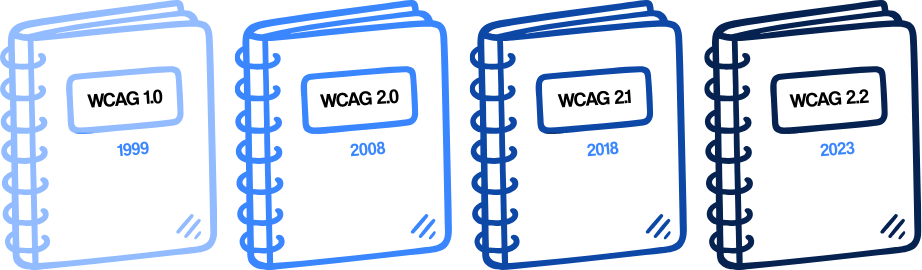
WCAG has evolved through four major releases — WCAG 1.0 (1999), WCAG 2.0 (2008), WCAG 2.1 (2018), and WCAG 2.2 (2023) — with each update expanding the guidance to reflect how the web, devices, and user needs have changed over time.
Each update expands or refines the guidance to address emerging accessibility needs, including mobile usage, touch interfaces, cognitive accessibility, and modern web applications.
The goal isn’t to constantly reinvent the guidelines, but to adapt them so they continue to reflect how people actually use the web.
Accessibility Is a Shared Effort
WCAG isn’t created by a single authority issuing rules from above. It’s the result of collaboration between accessibility experts, technologists, researchers, and people with disabilities working together to improve the web.
That collaborative approach is part of what makes the guidelines valuable. They’re grounded in real-world challenges and shaped by the people most affected by accessibility barriers.
For teams building websites and digital products, WCAG isn’t just a compliance reference. It’s a practical framework for creating experiences that are clearer, more usable, and more inclusive.
And like the web itself, accessibility continues to evolve — one improvement at a time.
AAArdvark can help!
AAArdvark goes beyond automated testing to provide the tools you need to identify, track, and fix accessibility issues that impact real users. Take accessibility beyond compliance.
Try AAArdvark for free today and start making real improvements that matter.
No credit card required.